A hundred and twenty kilometres of streets, eighty metres down
The stone that built Chișinău was cut from beneath the town of Cricova. What was left behind is a labyrinth with streets named after grape varieties.
By Pierre CalitzPolokwane16 August 2026
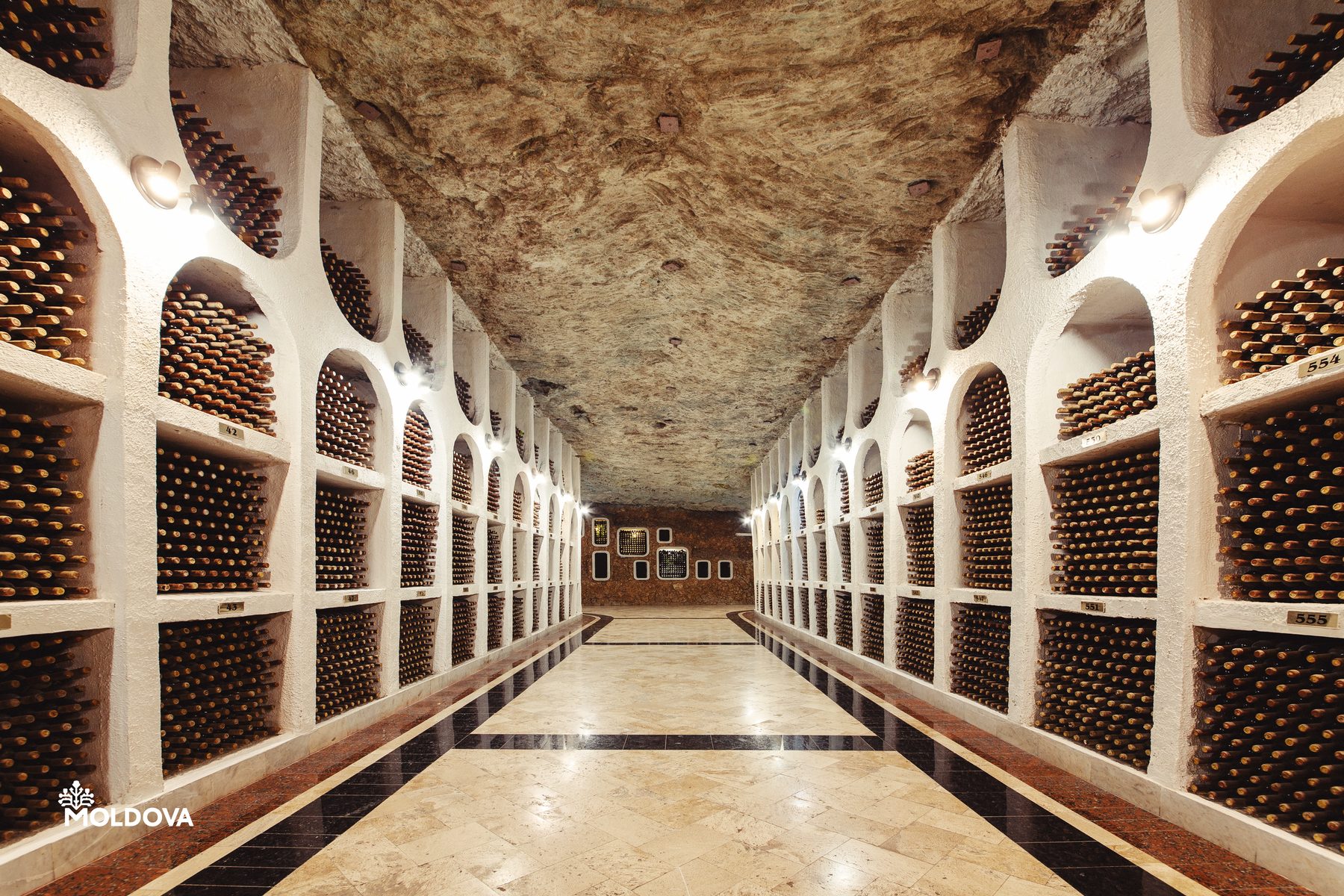
The galleries at Cricova. Moldova Toolkit, moldova.md
In the fifteenth century, quarrymen began cutting limestone out of the ground fifteen kilometres north of Chișinău. The stone went into the city. The holes stayed where they were.
By the middle of the twentieth century there were a hundred and twenty kilometres of them, running between eighty and a hundred metres below the surface, holding a constant twelve to fourteen degrees and humidity somewhere around ninety-seven per cent.
Those are, as it happens, the conditions wine requires.
The tunnels were converted for storage in the 1950s. The winery was founded in 1952 and the national collection begun in 1954. Half the roadways now hold wine, and each is named after what is stored in it. Cabernet. Feteasca. Pinot. You do not walk the cellars so much as drive them, which visitors do, because the distances are what they are.
What is kept down there
The National Oenotec holds roughly 1.3 million bottles, gathered from Burgundy, Bordeaux, the Moselle, Tokaj and elsewhere. The oldest is a red dessert wine bottled in Jerusalem for Easter in 1902. Four hundred were made. One is left, and it is behind glass at Cricova.
The collection also holds part of the private cellar of Hermann Göring, taken by the Red Army in Berlin and later divided between Moldova and Georgia. Accounts of how many bottles survived vary considerably. The winery says none of them will be opened.
In 2003 the complex was designated a national cultural heritage site.
A country of 2.4 million people with a wine industry older than most European states.
Cricova is the second largest cellar in the country. Mileștii Mici, further south, runs to two hundred kilometres and holds a Guinness World Record for the largest wine collection in the world. Moldova has the highest density of vineyard per head of population anywhere. Around 85 per cent of what it produces is exported, to more than seventy-five destinations.
Moldovan exports reached 108 international markets last year. The sixteen member states of the Southern African Development Community took under half a million euro between them.
Two bottles of Cricova were opened in Pretoria on 27 August, at a dinner marking Moldova’s thirty-fifth Independence Day. Both had to be shipped from Chișinău, because neither is sold here.
A hundred and twenty kilometres of cellar, and almost none of it reaches this continent. ◆
Pierre Calitz
Founder, Moldova in Africa Polokwane, South Africa
Reported from Africa
Sources: Cricova; moldova.md; Wine of Moldova; Balkan Insight. Accounts of the size of the Göring collection differ between sources and are reported here as disputed. Photograph: Moldova Toolkit, moldova.md
Moldova in Africa is an independent public diplomacy platform introducing the Republic of Moldova — its culture, history, language and European integration — to audiences across the African continent. It is not affiliated with, endorsed by, or acting on behalf of the Government of the Republic of Moldova.
Cultură și patrimoniu
O sută douăzeci de kilometri de străzi, la optzeci de metri adâncime
Piatra din care a fost construit Chișinăul a fost extrasă de sub orașul Cricova. Ce a rămas în urmă este un labirint cu străzi numite după soiuri de struguri.
De Pierre CalitzPolokwane16 august 2026
Galeriile de la Cricova. Moldova Toolkit, moldova.md
În secolul al XV-lea, pietrarii au început să taie calcar din pământ la cincisprezece kilometri nord de Chișinău. Piatra a intrat în oraș. Golurile au rămas unde erau.
Pe la mijlocul secolului al XX-lea existau o sută douăzeci de kilometri de galerii, aflate între optzeci și o sută de metri sub suprafață, cu o temperatură constantă de douăsprezece până la paisprezece grade și o umiditate de aproximativ nouăzeci și șapte la sută.
Acestea sunt, se întâmplă, condițiile de care are nevoie vinul.
Tunelurile au fost transformate pentru depozitare în anii 1950. Întreprinderea a fost înființată în 1952, iar colecția națională a început în 1954. Jumătate din străzi păstrează astăzi vin, și fiecare poartă numele a ceea ce se depozitează acolo. Cabernet. Fetească. Pinot. Nu atât se merge pe jos prin crăme, cât se circulă cu mașina, cum fac vizitatorii, pentru că distanțele sunt cele care sunt.
Ce se păstrează acolo jos
Oenoteca Națională adăpostește aproximativ 1,3 milioane de sticle, adunate din Burgundia, Bordeaux, Mosel, Tokaj și din alte părți. Cea mai veche este un vin roșu de desert îmbuteliat la Ierusalim pentru Paștele anului 1902. Au fost făcute patru sute. A mai rămas una, și se află după sticlă la Cricova.
Colecția păstrează și o parte din pivnița personală a lui Hermann Göring, luată de Armata Roșie la Berlin și împărțită ulterior între Moldova și Georgia. Relatările privind numărul de sticle păstrate variază considerabil. Întreprinderea spune că niciuna nu va fi deschisă.
În 2003 complexul a fost declarat obiect de patrimoniu cultural național.
O țară de 2,4 milioane de locuitori cu o industrie a vinului mai veche decât majoritatea statelor europene.
Cricova este a doua cramă ca mărime din țară. Mileștii Mici, mai la sud, numără două sute de kilometri și deține un record mondial Guinness pentru cea mai mare colecție de vinuri din lume. Moldova are cea mai mare densitate de vie pe cap de locuitor din lume. Aproximativ 85 la sută din producție este exportată, către peste șaptezeci și cinci de destinații.
Exporturile moldovenești au ajuns anul trecut pe 108 piețe internaționale. Cele șaisprezece state membre ale Comunității de Dezvoltare a Africii Australe au preluat împreună sub jumătate de milion de euro.
Două sticle de Cricova au fost deschise la Pretoria, la 27 august, la o cină care a marcat a treizeci și cincea Zi a Independenței Moldovei. Ambele au trebuit aduse din Chișinău, pentru că niciuna nu se vinde aici.
O sută douăzeci de kilometri de cramă, și aproape nimic din ea nu ajunge pe acest continent. ◆
Pierre Calitz
Fondator, Moldova in Africa Polokwane, Africa de Sud
Relatat din Africa
Surse: Cricova; moldova.md; Wine of Moldova; Balkan Insight. Relatările privind mărimea colecției Göring diferă între surse și sunt prezentate aici ca disputate. Fotografie: Moldova Toolkit, moldova.md
Moldova in Africa este o platformă independentă de diplomație publică, care prezintă Republica Moldova — cultura, istoria, limba și integrarea sa europeană — publicului de pe continentul african. Platforma nu este afiliată Guvernului Republicii Moldova, nu este susținută de acesta și nu acționează în numele său.